
If you have been shopping for a golf cart anywhere in the Hudson, Spring Hill, or New Port Richey area, you have probably noticed that dealers carry both gas and electric models. And if you are like most folks who walk into our shop at Affordable Golf Carts, the first question out of your mouth is usually something like, “So which one should I actually get?”
It is a fair question. And honestly, the answer is not the same for everyone.
We have been selling and servicing both types right here in Hudson, FL, for a long time now, and we have seen people thrive with gas golf carts, and we have seen people love their electric ones just as much. It really comes down to how you plan to use it, where you live, and what kind of ownership experience you want.
So let us walk through the real differences and help you figure out which direction to go.
How Golf Carts Work
A gas golf cart runs on a small engine, usually a 4-cycle motor that burns regular unleaded gasoline. You fill it up, turn the key, and go. Pretty similar to how a lawn mower or a small ATV works.
An electric golf cart runs on a bank of batteries, typically a 48-volt system, that powers an electric motor. You charge it overnight by plugging it in, and then you are good to go the next day.
Neither system is complicated. Both are reliable when maintained properly. The differences show up in how they feel to drive, what they cost over time, and what kind of lifestyle they fit into.
Range and How Far You Can Go
This is where gas carts have a clear advantage, and it is a big one for certain buyers.
A gas golf cart with a full tank can easily cover 100 to 120 miles before you need to refuel. That is a lot of driving. If you have a big property, use your cart for work around the yard, or just do not want to think about charging anything, gas gives you that freedom.
Electric carts with standard lead-acid batteries will typically get you 25 to 35 miles on a full charge. If you upgrade to lithium batteries, that number jumps up to around 40 to 60 miles, which is more than enough for most people doing neighborhood driving or quick errands.
For the average person riding around their community in Pasco County, an electric cart handles the daily driving just fine. But if you are hauling stuff around a ranch, going back and forth across a large piece of land, or just prefer the peace of mind of knowing you can keep going all day, gas is hard to beat on range.
Cost to Buy
There is a common belief that gas carts cost way more than electric ones, but it is not as dramatic as people think. In 2026, new golf carts from major brands like Club Car, E-Z-GO, and Yamaha generally fall somewhere between $5,000 and $18,000 depending on the model, features, and whether you go new or used.
On the lower end, electric carts do tend to be a little cheaper upfront. A basic new electric cart might start around $5,000 to $7,000, while a comparable gas model might be $6,000 to $9,000. But once you start adding features, lifted suspensions, custom seats, and upgraded wheels, the prices start to overlap quite a bit.
Used carts are a different story. You can find solid used gas carts from Club Car or Yamaha for well under $5,000, and used electric carts in good condition for similar prices. The key with used electric carts is the condition of the batteries, which we will get into shortly.
If you want to see what we currently have in stock, both gas and electric, you can check out our used inventory or browse our new carts.
Cost to Own Over Time
Here is where the gap starts to show up.
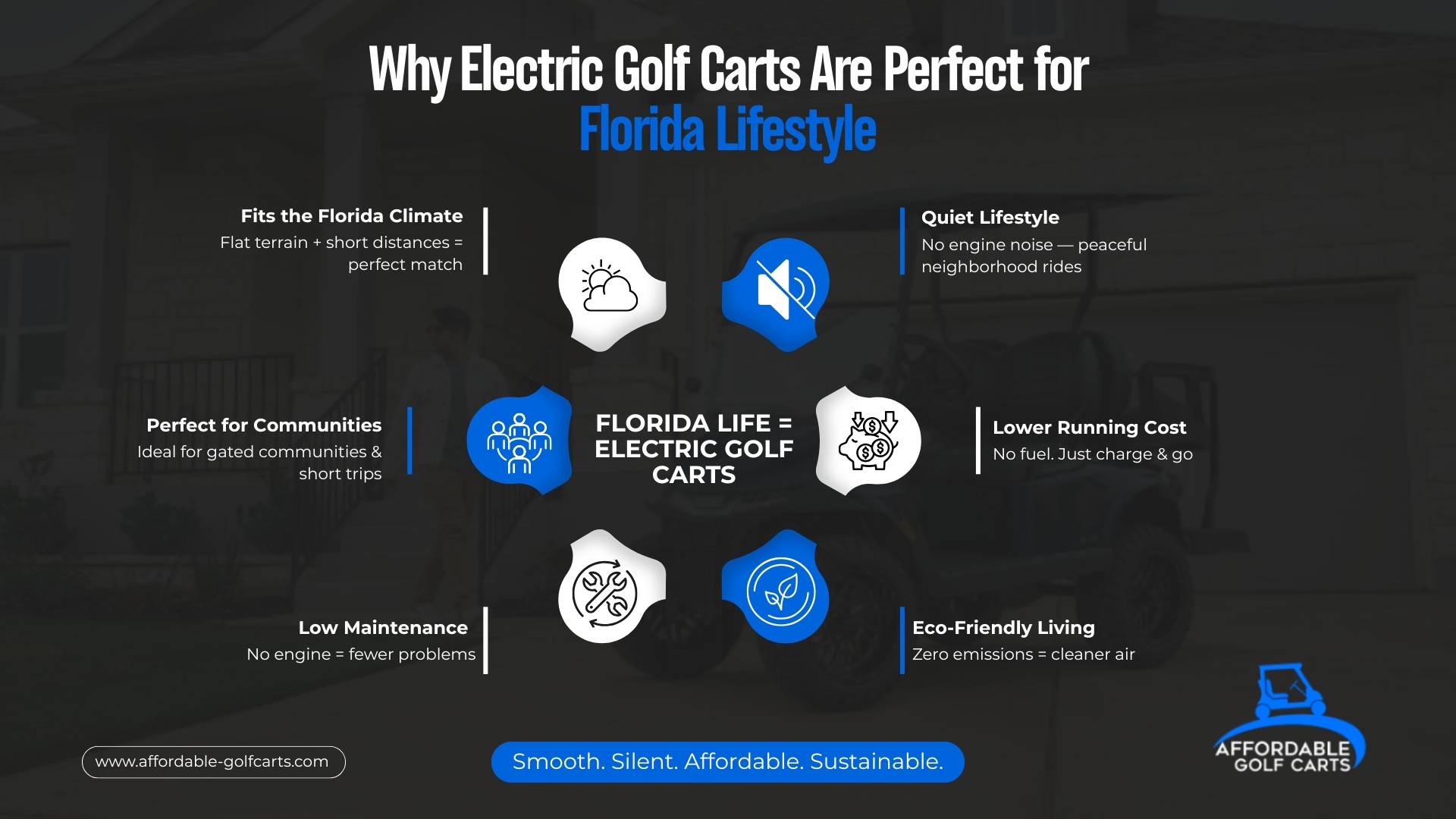
Electric carts are cheaper to run, plain and simple. Charging a 48-volt battery system costs pennies compared to buying gasoline. You are looking at maybe $1 to $2 per full charge depending on your electricity rates. Over a year of regular use, that adds up to almost nothing.
Gas carts obviously need fuel, and while golf carts are not gas guzzlers, it is still an ongoing expense. You will also need oil changes, spark plug replacements, air filter swaps, and other engine maintenance that comes with having a combustion motor.
The one high cost for electric cart owners is batteries. A full set of lead-acid batteries will last anywhere from 4 to 7 years, depending on how well you maintain them, and replacing the whole set can run you $800 to $1,500. Lithium batteries last much longer (some go 10 years or more) but cost significantly more upfront.
So if you are thinking long-term, electric tends to be the more budget-friendly choice for most casual riders. Gas carts cost a bit more to maintain, but they hold up extremely well for heavy-use situations.
Maintenance
This one is pretty straightforward.
Electric carts have fewer moving parts. No engine means no oil changes, no spark plugs, no fuel filters, no carburetor cleaning. You still need to take care of your batteries (checking water levels on lead-acid batteries, keeping terminals clean, charging properly), but overall, the maintenance load is lighter.
Gas carts need regular engine care. Oil changes, belt inspections, valve adjustments, air filter replacements, and periodic carburetor tuning are all part of the deal. None of it is expensive or difficult, but it does add up over the years, and you do need to stay on top of it.
If you are someone who does not want to mess with much maintenance and just wants a cart that you plug in and forget about, an electric cart is your friend. If you do not mind a little wrenching or you already have a mechanic you trust, gas is perfectly manageable.
Our service and parts department handles both gas and electric carts, so either way, you are covered.
Performance and Power
Gas carts generally have more raw pulling power. If you need to haul heavy loads, tow a trailer, or climb steep hills, a gas engine handles that kind of work better than most standard electric setups.
Electric carts, on the other hand, have instant torque. You press the pedal, and the cart responds immediately. That snappy acceleration feels great for neighborhood driving and short trips. Electric carts also tend to have slightly higher top speeds than gas models, usually capping out around 25 mph compared to 18 to 20 mph for most gas carts.
For Florida terrain specifically, most areas around Hudson, Spring Hill, and Pasco County are pretty flat. So the hill-climbing advantage of gas carts is less of a factor here compared to somewhere with lots of elevation changes. If you are mostly driving around flat neighborhoods and golf courses, an electric cart has all the performance you need.
Noise and Comfort
This is honestly one of the biggest practical differences, and it catches some first-time buyers off guard.
Electric carts are nearly silent. You hear a soft hum, and that is about it. No engine vibration, no exhaust smell, no noise to bother the neighbors. If you are driving through a quiet neighborhood early in the morning or late in the evening, nobody is going to hear you.
Gas carts are louder. Modern ones have gotten quieter over the years, but there is still engine noise and vibration. The engine sits right under the seat in most models, so you can feel it running. Some people genuinely do not mind this at all. Others find it annoying, especially in the Florida summer heat when the engine adds extra warmth underneath you.
Also worth mentioning, many golf courses and some gated communities only allow electric carts. So if you plan on using yours on the course or in a community with rules about that sort of thing, check the regulations before buying gas.
Storage and Sitting Idle
Here is an area where gas actually has a quiet advantage.
If you go on vacation for a month or leave your cart sitting in the garage for an extended period, a gas cart handles it better. Add some fuel stabilizer, and the cart will sit patiently until you come back.
Electric carts do not love sitting idle. Lead-acid batteries slowly lose their charge when they sit, and letting them drain too low can cause permanent damage. If you are going to be away for a while, you need to either keep the cart plugged into a smart charger or have someone check on it. Lithium batteries are much better at holding their charge, but they are not completely maintenance-free in storage either.
For snowbirds who spend summers up north and winters in Florida, this is worth thinking about. A gas cart might save you some battery headaches if the cart sits unused for months at a time.
So Which Golf Cart to Buy?
Here is how we usually break it down for customers who come into our shop:
Go with an electric cart if you:
- Drive mostly around your neighborhood, community, or a golf course
- Want the quietest, smoothest ride possible
- Prefer lower maintenance and cheaper operating costs
- Have access to a standard outlet for overnight charging
- Care about zero emissions and a clean ride
Go with a gas cart if you:
- Need to cover long distances without worrying about recharging
- Use your cart for work, hauling, or towing
- Drive on rough or hilly terrain regularly
- Leave your cart sitting for long periods without use
- Do not have reliable access to electricity for charging
There is no wrong answer here. Both types of carts are well-built, reliable, and perfect for Florida living. It just depends on what your day-to-day actually looks like.
Come See Both Options in Person
We carry both gas and electric golf carts at our shop in Hudson, FL. New and used, from brands like Club Car, Yamaha, and E-Z-GO. The best way to decide is honestly to come test drive both and see which one feels right.
We are located at 10010 State Road 52, Hudson, FL 34669 and you can reach us at (727) 819-1405. We are open Tuesday through Saturday.
If you want to browse what we have available right now, take a look at our current inventory. And if financing is on your mind, check out our financing options to see what works for your budget.
Affordable Golf Carts has been helping folks across Hudson, Spring Hill, New Port Richey, and the greater Pasco County area find the right golf cart for years. Whether you are looking for a gas cart, an electric cart, new or used, we are here to help you find something that fits your life and your budget.
